
Comparable Valuation: 7 institutional methods
Beyond GoValue and Estibot. Transaction-multiple, comparable-yield, end-user willingness — methods used in $100K+ auctions.
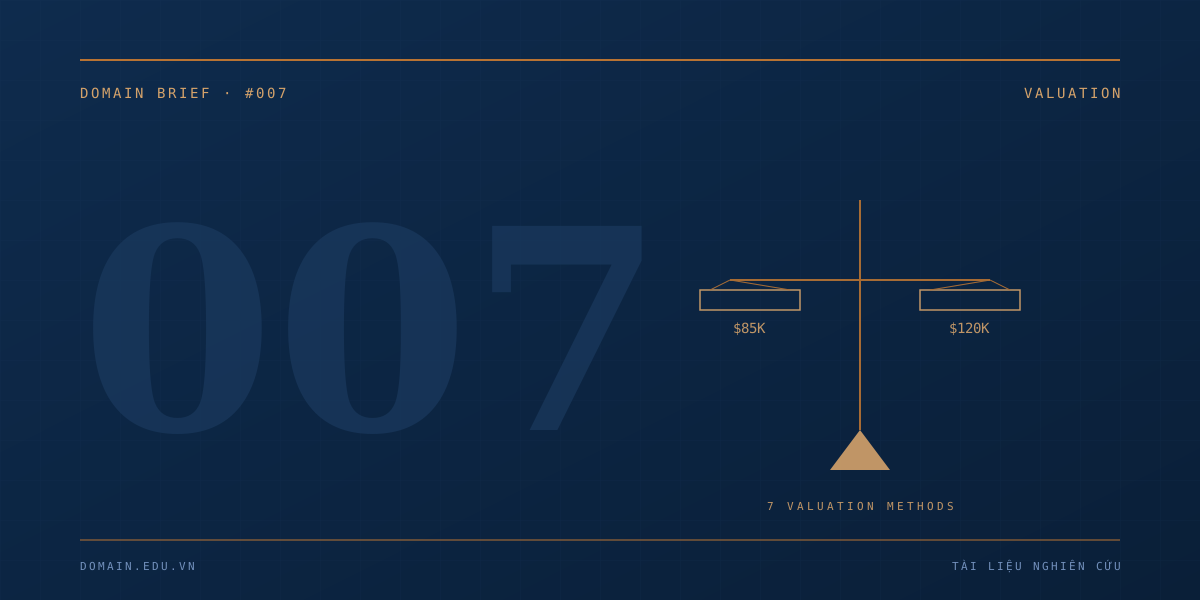
GoValue and Estibot deliver an algorithmic estimate in seconds, but transaction data shows their average deviation from actual closed price is ±42%. In auctions above $100K, no serious broker submits a proposal based on a bot estimate alone. They use 7 other methods — and this brief summarises each.
Four comparable methods
1. Direct comparable. Find 3-5 names with the same pattern (length, thematic, TLD) traded in the past 18 months. The median price is the baseline. Source: NameBio, DNJournal Year-End Sales Report.
2. Pattern multiple. A 4-letter .com trades within $4K-$50K depending on vowel-consonant pattern. CVCV typically commands premium over CVVC. Reference multiple: 2024-2025 average sale price by pattern class.
3. Sector comparable. Within a sector (AI, Crypto, FinTech), 1-word names trade at 8-15x equivalent 2-word names. Example: Crypto.com vs CryptoTrade.com — roughly 12x spread.
4. Top-sale extrapolation. If Voice.com sold for $30M, equivalent quality names (1-word, 5 letters, English-friendly, generic noun) have ceiling reference $30M — discounted by quality coefficient (0.3-0.7).
Three income-based methods
5. End-user willingness-to-pay (WTP). The hardest method. Estimate: what percentage of an end-user's annual marketing budget should they pay for the primary brand domain? Rule of thumb: 5-15% of a Series A startup's first-year marketing budget is the maximum domain spend.
6. Comparable yield. Convert the domain to hypothetical cash flow: if leased (lease-to-own), monthly revenue would be? Apply 15-20%/year discount rate for NPV. Suits names with organic traffic >500/month.
7. Discounted cash flow (DCF) project. For names in a category serving multiple potential startups (AI, FinTech), forecast probable sale year + revenue multiple → discount to present value.
Domain valuation is not an exact science. Good valuation produces a narrow consensus range across multiple independent methods — never trust a single number.
Combining the 7 methods
An institutional valuation typically runs 4 of the 7 methods, then takes a weighted average with weights according to confidence per method for that asset. Final output is a range (e.g. $85K-$120K), never a single figure. Narrow range = high consensus = trustworthy proposal.
Brief #001 shows how 5 actual deals priced. Brief #008 explores the market makers who set the reference prices for the entire market.
Frequently asked
Why are Estibot and GoValue off by 42%?
Both rely on statistical algorithms over historical averages — they cannot capture liquidity premium or live end-user willingness. Estibot may price a name at $5K, but if an AI conglomerate needs that exact name, the actual price is $50K. Algorithms cannot see "who currently needs this".
Which method matters most for individual investors?
Direct comparable + Pattern multiple. Both rely on freely-available NameBio data, no inside information or end-user research required. Applicable to 90% of names below $50K. DCF/WTP methods become relevant only at $100K+.
Range $85K-$120K vs single price $100K — which to list?
List at a single number ($95K-$110K depending on strategy), but internally hold the range. If an offer comes at $80K (below range), decline. If $90K (low end), counter at $105K. Holding the range mentally lets you negotiate from principle, not emotion.
You just finished a brief ★
Get the next brief by email every Monday morning. Or browse 1,000+ premium domains on our partner marketplace.