ROI Case Study: 5 recent 8-9 figure domain deals
From Voice.com $30M to NFTs.com $15M — anatomy of the buyer, exit multiple, and lessons for individual Vietnamese investors.
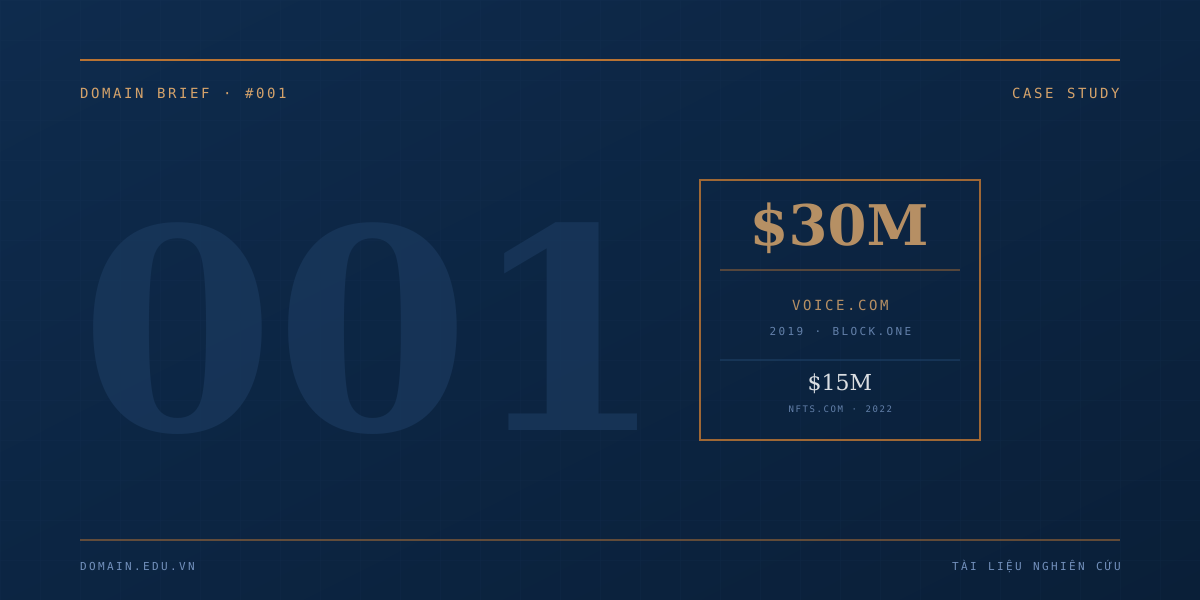
In 2019, Block.one — the company behind the EOS blockchain protocol — paid $30 million for Voice.com, acquiring it from MicroStrategy. The deal remains the largest publicly disclosed domain transaction in history, and it crystallised something the industry had been suspecting for years: short, generic .com names had quietly become a strategic asset on the balance sheets of major technology companies.
This brief dissects five recent 8-9 figure transactions across three axes: (1) buyer profile — institutional vs strategic vs financial; (2) exit multiple relative to original cost basis; (3) actionable lessons for individual investors.
Five deals, five buyer profiles
Four of the five deals had a strategic buyer — an organisation acquiring the name for an existing brand — rather than a flipper. That distinction matters: it confirms that premium domain valuations are driven by end-user demand, not pure speculation.
NFTs.com was acquired in 2022 by Ron Andruff at the height of the NFT cycle, with an estimated 30-50x exit multiple for the seller. Crypto.com was bought by the Crypto.com Foundation from a US developer for the figure above in 2018 — exit multiple roughly 200x.
The buyer of an 8-figure domain is almost always a brand-aligned organisation. Individual investors are rarely the final buyer.
Lessons for individual investors
First, names under 5 characters in core TLDs (.com / .ai / .io) remain the segment with the clearest catalysts — there is always a strategic buyer waiting. The $5K-$50K range is realistic for medium-sized portfolios.
Second, optimal hold-period is 3-5 years, not 6 months. In all five deals above, the seller held the asset at least 3 years before the peak liquidity event arrived. Quick flips suit only sub-$1K expired drops, not premium inventory.
Third, liquidity events arrive without warning. The seller of Voice.com did not actively shop the asset — Block.one approached through a broker. Have your distribution rails (Sedo, Afternic, a specialised broker) ready before the event, not after.
Further reading in DOMAIN BRIEF
Brief #002 examines the 10-year price cycle to identify where peak liquidity falls. Brief #007 covers the seven institutional valuation methods — including the transaction-multiple approach used in Voice.com's pricing. Brief #010 walks through exit strategy: when to sell, where to sell, at what price.
Frequently asked
Can individual investors realistically buy 7-8 figure domains?
Yes, with timing and patience. Both Crypto.com and Voice.com were once owned by individuals before passing to institutional buyers. The decisive factors are (1) alignment between the name and an emerging thematic, (2) hold-period long enough for a liquidity event, (3) professional negotiation channels at exit.
Did Block.one overpay for Voice.com?
Some analyses argue Block.one paid 2-3x "fair value" by comparable methods. But for a company that raised $4B in an ICO, $30M was strategic marketing rather than financial investment. This is precisely why strategic buyers can pay above what financial buyers would.
Why are large domain deals rarely disclosed?
Most premium transactions ($100K+) carry NDAs. NameBio and DNJournal capture only 30-40% of actual deal flow. Eight-figure deals tend to leak because the brand is publicly used afterwards — as when Block.one rebranded EOS as Voice on Voice.com.
You just finished a brief ★
Get the next brief by email every Monday morning. Or browse 1,000+ premium domains on our partner marketplace.
RELATED BRIEFS